Agentic AI in Financial Services: Driving Autonomy and Efficiency in 2025
Agentic AI in Financial Services: Driving Autonomy and Efficiency in 2025 Home / Blog In the…

As a senior leader in financial services or hospitality, you’re no doubt familiar with AI’s role in streamlining operations. But what if AI could go beyond reacting to inputs and start anticipating needs, making decisions, and executing tasks independently? Enter Agentic AI—the game-changer that’s shifting artificial intelligence from passive tools to proactive partners in business strategy.
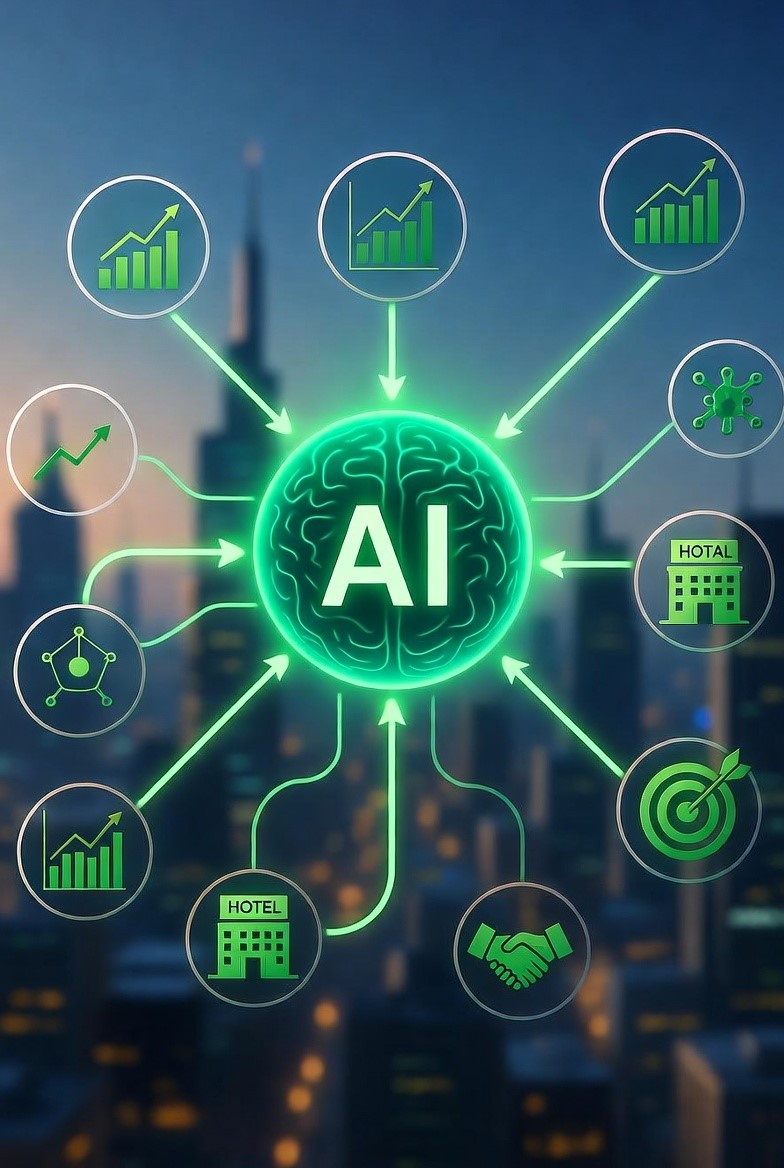
Agentic AI represents the next frontier in autonomous AI systems, where machines don’t just process data but pursue goals with minimal oversight. This evolution promises to tackle complex challenges that traditional AI struggles with, like dynamic market shifts or personalized guest experiences. In this guide, we’ll explore what Agentic AI means for your organization and how it can drive real results.
What is Agentic AI?
Agentic AI refers to artificial intelligence systems designed to operate autonomously, making decisions and taking actions to achieve specific objectives without constant human intervention. Unlike basic chatbots or predictive analytics, these systems exhibit agency—they perceive their environment, reason through options, and act accordingly.
At its core, Agentic AI builds on advanced machine learning models, incorporating elements like goal-setting and adaptive learning. For business leaders, this means deploying AI that evolves with your operations, reducing the need for manual tweaks.
Key Characteristics of Agentic AI
Autonomy stands out as a hallmark. Agentic AI can handle multi-step processes, learning from outcomes to improve future performance. It also emphasizes proactivity, where the system initiates actions based on predicted needs rather than waiting for commands.
Another key trait is adaptability. In volatile markets, such as finance, Agentic AI adjusts strategies in real-time, ensuring resilience.
Agentic AI vs. Traditional AI
Traditional AI excels at narrow tasks, like data analysis or pattern recognition, but it lacks initiative. Agentic AI, however, integrates AI decision-making to pursue broader goals, making it ideal for complex workflows.
For instance, while a standard AI might flag a fraudulent transaction, an agentic system could investigate, block it, and notify stakeholders—all independently. This shift from reactive to proactive AI marks a significant leap for efficiency.
How Agentic AI Works
Understanding the mechanics of Agentic AI demystifies its power. It operates through a cycle of observation, planning, and execution, often powered by large language models enhanced with tools for real-world interaction.
In practice, these systems use agentic workflows to break down goals into actionable steps. A single agent might handle simple tasks, but for complexity, multi-agent collaboration comes into play.
Core Components: Perception, Reasoning, Action
Perception involves gathering data from various sources, like market feeds or customer interactions. Reasoning then applies logic—often via advanced algorithms—to evaluate options.
Finally, action executes the plan, whether that’s adjusting a portfolio or optimizing room assignments. This loop ensures continuous improvement.
Role of Multi-Agent Collaboration
Multi-agent systems allow specialized AI agents to work together, dividing labor for efficiency. In hospitality, one agent could manage bookings while another handles personalization, coordinating seamlessly.
This collaboration mirrors human teams but operates at scale, accelerating processes by 30% to 50% in enterprise settings.
Agentic AI Applications in Business
Agentic AI applications are already transforming industries, offering tangible ROI. Nearly 80% of companies are deploying these systems, with many projecting over 100% returns. For senior leaders, the key is identifying where autonomy adds value.
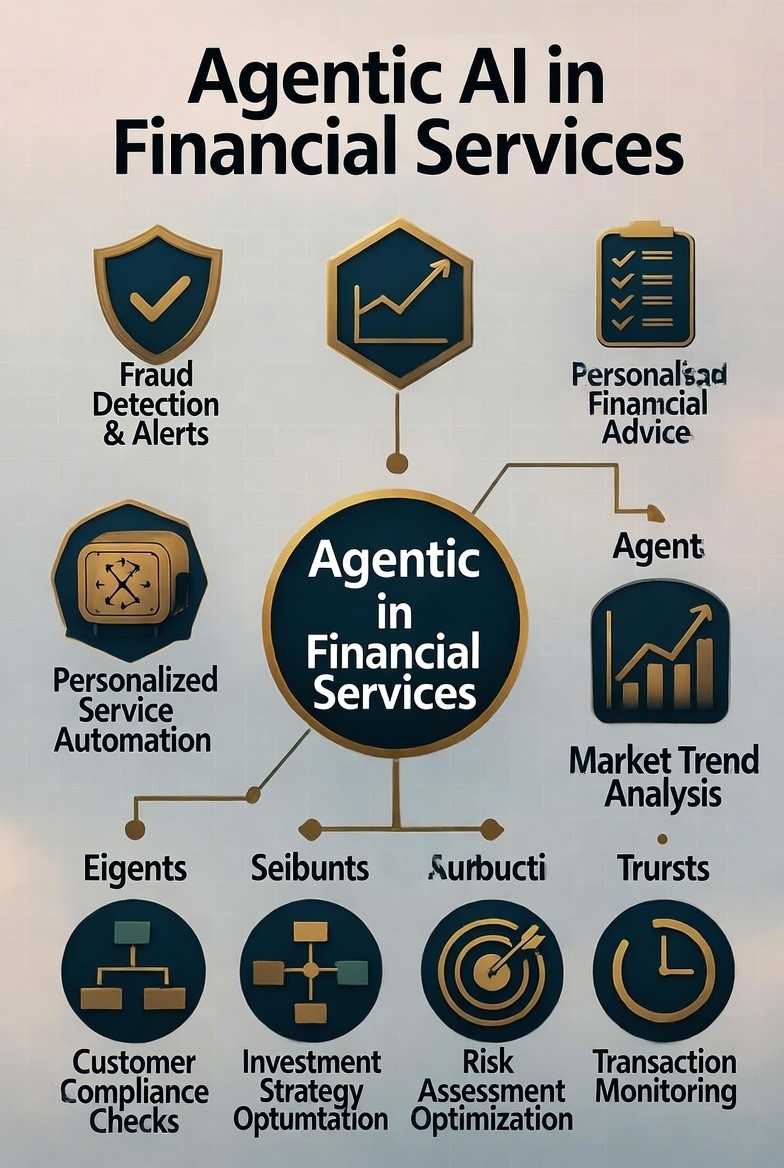
In financial services, Agentic AI shines in high-stakes environments. It can automate risk assessments or execute trades based on real-time data.
Transforming Financial Services
Imagine an autonomous AI system monitoring global markets, detecting anomalies, and rebalancing portfolios proactively. This reduces human error and speeds up responses to volatility.
A real-world example: Banks use Agentic AI for fraud detection, where agents cross-reference transactions across databases, flagging issues instantly. This not only saves millions but enhances compliance.
[LINK: Discover KrishuAI’s Financial AI Solutions]
Enhancing Hospitality Operations
In hospitality, Agentic AI elevates guest experiences through personalization. An agent could analyze preferences, adjust room amenities, and even predict maintenance needs.
For instance, dynamic pricing agents adjust rates based on demand forecasts, boosting revenue by up to 20%. Meanwhile, service agents handle check-ins via chat, freeing staff for high-touch interactions.
This proactive approach turns routine operations into competitive advantages.
Other Industry Use Cases
Beyond these, Agentic AI powers supply chain optimization in manufacturing, predicting disruptions and rerouting logistics. In healthcare, it assists with patient monitoring, alerting teams to changes.
Benefits of Implementing Agentic AI
The appeal of Agentic AI lies in its measurable impacts. Businesses report accelerated processes and smarter decisions, leading to sustained growth.
Efficiency gains are immediate—automating workflows frees leaders to focus on strategy. Data shows 30-50% faster operations in core platforms.
Efficiency and Productivity Gains
By handling repetitive tasks, Agentic AI boosts productivity. Teams in finance can shift from data entry to innovation, while hospitality staff prioritize guest satisfaction.
One study highlights cost savings of up to 40% through autonomous agents in operations. It’s not just about speed; it’s about scaling without proportional costs.
Strategic Decision-Making Improvements
Agentic AI enhances foresight with AI decision-making. It simulates scenarios, providing insights that inform board-level choices.
For leaders, this means data-driven confidence in uncertain times, turning reactive strategies into proactive ones.
Challenges and Ethical Considerations
No technology is without hurdles. Agentic AI’s autonomy raises questions about control and accountability.
Potential biases in training data could lead to flawed decisions, especially in sensitive areas like finance. Transparency is crucial to build trust.
Potential Risks and Mitigation Strategies
Over-reliance might erode human skills, so hybrid models—with agent-to-human handoffs—are recommended. Security risks, like data breaches, demand robust protocols.
Start with pilot programs to test and refine.
Ensuring Responsible Deployment
Ethical AI frameworks guide implementation. Prioritize fairness, explainability, and compliance with regulations like GDPR.
Businesses that address these early gain a reputational edge.
Getting Started with Agentic AI
Adopting Agentic AI doesn’t require a complete overhaul. Begin with assessing your pain points, like inefficient workflows.
Partner with experts to customize solutions. Platforms like AWS Bedrock offer building blocks for agentic systems.
Steps for Business Leaders
Tools and Platforms to Explore
Open-source options like LangChain enable custom agents, while enterprise provide scalable deployments.
[LINK: Explore KrishuAI Agentic Solutions]
In conclusion, Agentic AI is more than a buzzword—it’s a strategic imperative for leaders in financial services and hospitality. By embracing autonomous AI systems and agentic workflows, you can unlock unprecedented efficiency and innovation. Don’t let competitors outpace you; contact KrishuAI today to develop a tailored Agentic AI strategy that propels your business forward.
Agentic AI in Financial Services: Driving Autonomy and Efficiency in 2025 Home / Blog In the…

Agentic AI in Hospitality: Elevating Guest Experiences and Operational Efficiency Home / Blog Running a hotel…

Industry Trends in AI: Key Shifts Shaping 2025 and Beyond Home / Blog Artificial intelligence is…