Agentic AI in Financial Services: Driving Autonomy and Efficiency in 2025
Agentic AI in Financial Services: Driving Autonomy and Efficiency in 2025 Home / Blog In the…

As a senior leader in financial services or hospitality, you’re likely battling outdated processes that eat into profits and slow response times. Enter autonomous processes and benefits—they leverage artificial intelligence to create systems that run themselves, adapting to changes without constant human input. In 2025, agentic AI is making this a reality, promising transformative gains in efficiency and innovation.
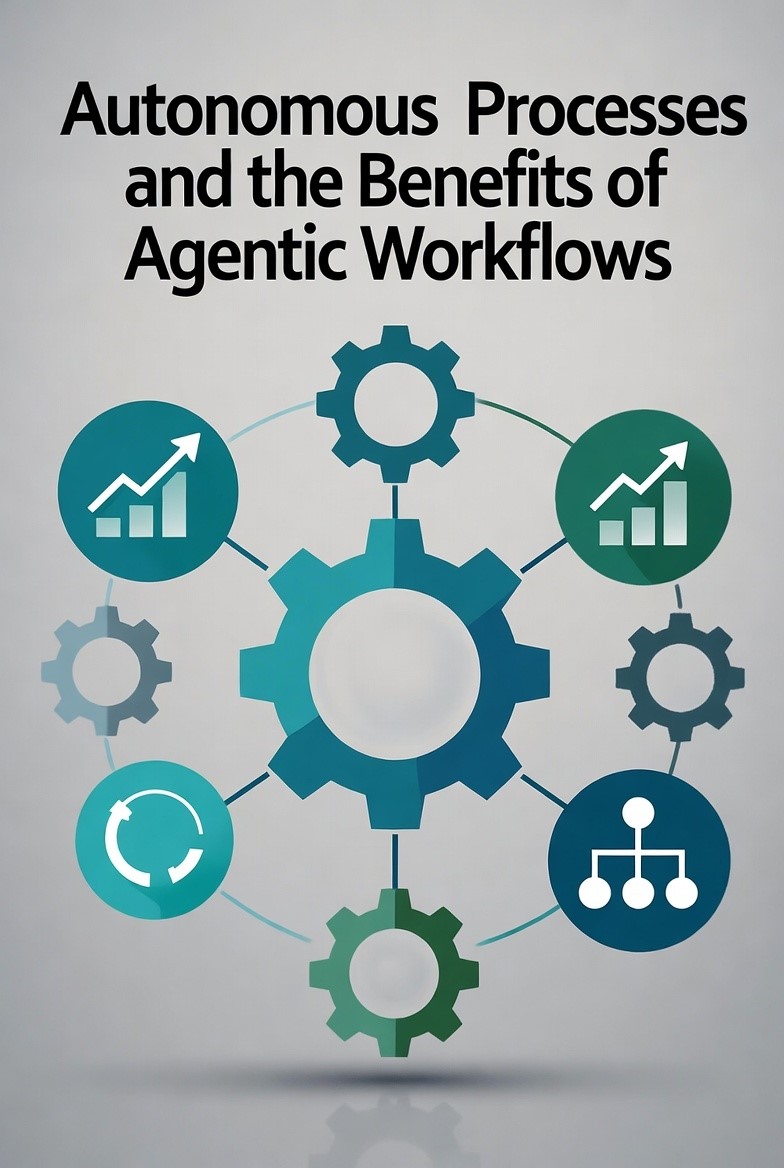
Autonomous processes refer to AI-driven workflows where systems perceive, decide, and act independently to achieve goals. For businesses, this means shifting from reactive automation to proactive intelligence. Let’s unpack how this works and why it’s essential now.
Autonomous processes build on advanced AI to handle complex tasks end-to-end. They’re not just scripts—they’re intelligent systems that evolve.
This technology is gaining traction fast. By 2025, AI agents are expected to revolutionize workflows across industries.
Autonomous agents, or AI agents, are the core of these processes. They operate like virtual employees, pursuing objectives with minimal oversight.
In business, they manage everything from supply chains to customer interactions. Agentic AI takes this further, enabling multi-step reasoning for real-world applications.
Traditional automation follows fixed rules, like robotic process automation (RPA) for data entry. Agentic AI, however, adapts to new data, making decisions in uncertain environments.
This flexibility is key for dynamic sectors. Where RPA might fail on exceptions, agentic systems learn and adjust, reducing errors significantly.
To grasp autonomous processes, consider their building blocks. These elements form a loop that mimics human cognition but at machine speed.
Integration with existing tools is straightforward. Platforms like Salesforce’s Agentforce embed these into business workflows.
Perception gathers data from sources like sensors or databases. Reasoning evaluates options, while planning sequences actions.
For instance, in inventory management, the system predicts shortages and plans reorders autonomously.
Execution performs tasks, often via APIs. Feedback loops allow adaptation, refining performance over time.
This creates resilient systems. In 2025, such loops enable 5-10x faster responses in applications.
The benefits of autonomous processes are profound, backed by 2025 data. McKinsey reports AI can lower skill barriers and boost proficiency across fields.
Businesses adopting these see measurable ROI. Over 50% report cost reductions in key areas.
Autonomous AI systems automate repetitive tasks, freeing teams for strategic work. Productivity can surge 30-50% with agentic workflows.
In practice, this means faster operations. AI handles HR activities, slashing processing times.
Cost benefits are clear: Up to 45% reductions in operational expenses. Scalability comes naturally, as systems handle growing volumes without added staff.
For enterprises, this translates to “always-on” execution, enabling global reach without proportional costs.
Autonomous decision-making AI provides data-driven insights, simulating scenarios for better choices. This fosters innovation, like new product strategies.
PwC predicts AI agents will unlock unprecedented productivity by blending human creativity with machine efficiency.
In financial services, autonomous processes shine in high-stakes environments. Deloitte highlights their role in supercharging automation.
Adoption is accelerating. By 2025, 33% of enterprise software will include agentic AI.
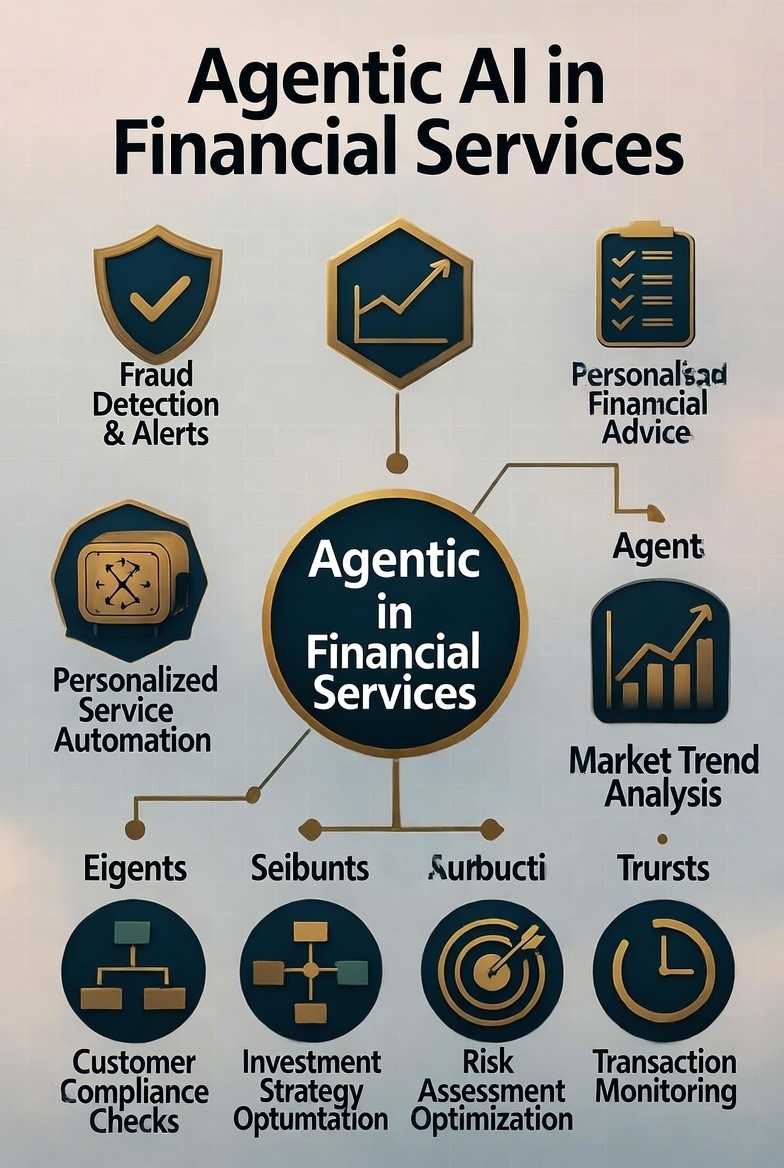
AI agents monitor transactions in real-time, detecting anomalies and acting to prevent fraud. This closes gaps, minimizing losses.
In compliance, they automate KYC and AML checks, ensuring regulatory adherence with fewer errors.
[LINK: KrishuAI Financial AI Solutions]
Autonomous agents analyze spending patterns and life events to offer tailored advice. This boosts client satisfaction and retention.
Forbes notes agentic AI’s potential to reshape financial planning.
Hospitality benefits from autonomous processes through personalized, efficient operations. McKinsey explores how agentic AI remaps travel.
Consumer-facing industries lead in AI agent implementation.
AI agents customize stays, from room preferences to itinerary suggestions. This elevates satisfaction, driving loyalty.
Five9 discusses how agentic AI blends empathy with automation for seamless service.
Back-end tasks like inventory and maintenance run autonomously. Predictive analytics prevent downtime, cutting costs.
In hotels, this means dynamic pricing and staffing adjustments in real-time.
No innovation is seamless. Challenges include integration and ethical risks.
Stanford’s 2025 AI Index notes AI’s embedding in everyday life but warns of biases.
Legacy systems pose barriers; start with pilots to test compatibility. Talent gaps? Train teams on oversight.
Phased rollouts minimize disruption, yielding quick wins.
Address biases through diverse training data. Governance frameworks ensure transparency and accountability.
In 2025, ethical AI is non-negotiable for trust-building.
In conclusion, autonomous processes and benefits extend far beyond automation—they empower artificial intelligence, agentic AI, and autonomous agents to drive efficiency, savings, and innovation in 2025. For leaders in financial services and hospitality, embracing these means staying competitive. Contact KrishuAI today to design autonomous solutions that deliver real results for your business.
Agentic AI in Financial Services: Driving Autonomy and Efficiency in 2025 Home / Blog In the…

Agentic AI in Hospitality: Elevating Guest Experiences and Operational Efficiency Home / Blog Running a hotel…

Industry Trends in AI: Key Shifts Shaping 2025 and Beyond Home / Blog Artificial intelligence is…